
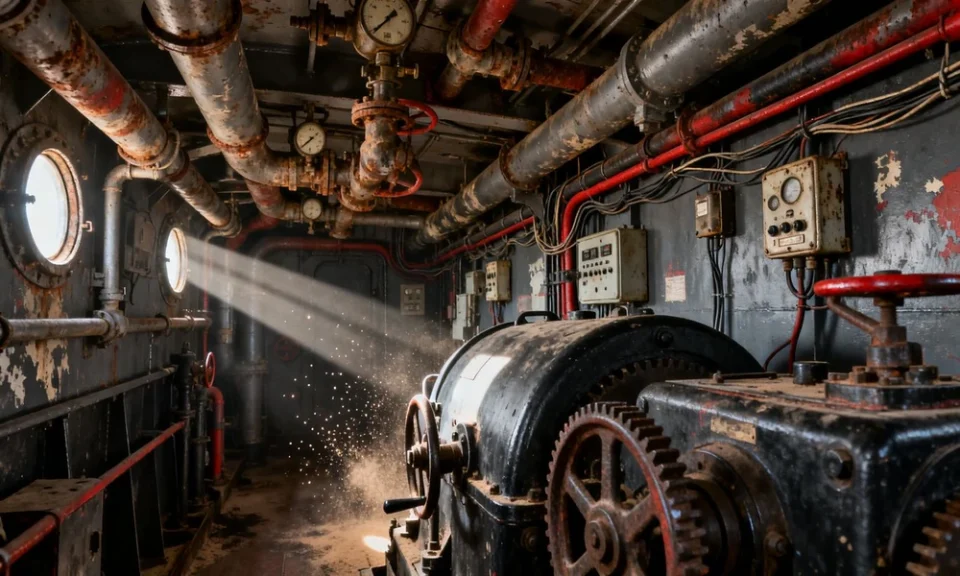
The integration of asbestos into naval construction was driven by the urgent needs of 20th-century shipbuilding. For decades, the U.S. military relied on this material due to its remarkable durability and high heat resistance, which made it indispensable for protecting hardware. Sailors often operated in environments where temperatures reached dangerous levels, unaware that the air they inhaled contained hidden hazards.
Widespread use of asbestos for thermal insulation
Designers prioritized asbestos because it provided unmatched thermal efficiency for steam piping. By encasing pipes and boilers, the material ensured that vital systems could operate under extreme pressure without compromising safety or structural integrity.
Fireproofing requirements during wartime construction
Mass production efforts during World War II demanded materials that could prevent catastrophic fire spread. Asbestos served this specific need perfectly by providing non-combustible barriers within the cramped, fuel-heavy confines of naval vessels.
Regulatory ignorance regarding health risks until the 1970s
For many years, the medical community remained largely ignorant of the risks posed by microscopic fibers. It was not until public health awareness shifted in the 1970s that the Navy began to phase out these materials and address the legacy of earlier exposure.
Common areas of exposure below deck
The environment below deck was often saturated with pulverized material that became airborne during normal operations and maintenance. Because ventilation was limited, sailors spent their shifts working in spaces where fiber concentrations remained high, leading to what many now recognize as systemic exposure risks.
Engine rooms and boiler compartments
Personnel assigned to these areas lived and worked alongside miles of insulated piping. The heat of the engines often degraded the insulation, releasing fibers directly into the breathing zones of those responsible for monitoring the machinery.
Piping, valves, and pump insulation
Maintaining complex pipe networks meant constant contact with asbestos-containing materials. Standard maintenance tasks involved handling specific components that historically shielded the ship’s infrastructure. These items regularly required replacement or adjustment, putting technicians directly in contact with, for example:
- Thermal insulation blocks on steam lines
- Gaskets and sealant between pipe flanges
- Valve packing rings designed for high pressure
- High-temperature pump casing liners
These components were essential for keeping the ship moving, but their maintenance inadvertently created clouds of hazardous dust.
Electrical systems and wiring insulation
Electricians and related staff often handled asbestos-based materials while routing wiring through tight corridors. This work frequently involved cutting through bulkheads and clearing insulation to reach junction boxes, ensuring a full distribution of particles into the ventilation cycle.
Sleeping quarters and mess halls near steam pipes
Even sailors far from the engine room were not fully protected. Steam pipes ran throughout the ship to deliver heat and hot water, meaning that crew members in high-traffic areas were often exposed to fibers shed into the air through leaking or degrading pipe coverings.
Occupations at the highest risk within the fleet
Certain roles within the Navy required regular, direct contact with materials that contained concentrated hazardous substances. While all hands were potentially affected by the ship-wide distribution of fibers, those whose daily tasks centered on heavy maintenance carried the highest volume of exposure.
Pipefitters and steamfitters
These professionals spent their days repairing and modifying the vast networks of steam pipes found throughout every vessel. The nature of their trade necessitated the constant removal and installation of old, friable insulation.
Boilermakers and engine attendants
The heart of the ship relied on boilers that were extensively lined with fireproof materials. These individuals monitored and maintained these systems, inhaling dust created by the vibrations and thermal cycling of the equipment.
Shipyard workers and maintenance crews
Maintenance crews at navy yards often performed extensive tear-outs of older, degraded materials. This process resulted in significant long-term health consequences for many who spent their careers working in these confined, dust-filled areas.
Damage control teams and firefighting units
Firefighters were at the front line of risks, as they often had to tear through material to extinguish fires or reach damaged sections. These emergency actions frequently disturbed asbestos, which would then linger in the air long after the incident subsided.
Secondary exposure risks for naval personnel
It was not just those directly touching the ship’s machinery who faced difficulty. Because the vessels functioned as self-contained environments, there was little escape from the spread of particulates, regardless of rank or duty station.
Disturbance during routine maintenance and repairs
Small-scale repairs, often performed by shipmates in the vicinity, could release fibers just as effectively as major refits. Every time a wrench turned a gasket or a panel was removed, fine particles entered the general circulation of the ship.
Airborne fibers in confined ventilation systems
Centralized ventilation meant that fibers pulled from the engineering spaces could be distributed to other floors. This effectively turned the ship’s own comfort system into a vector for transmitting hazardous dust throughout the living quarters.
Laundering contaminated work clothing
Sailors who worked in high-exposure jobs often wore clothing that absorbed dust. By laundering these items with the rest of the crew’s laundry, fibers were redistributed and cross-contaminated communal spaces.
Exposure to off-duty crew members from dust particles
Dust tracked into mess halls or sleeping areas meant that sailors off-duty were inadvertently exposed. The continuous circulation within these sealed ships meant that hazardous remnants could persist long before, or long after, the primary source of the dust was addressed.
The long-term health consequences of Navy service
Medical outcomes related to service on older vessels have only become fully clear as the veteran population has aged. Identifying these patterns through studies like the mesothelioma medical study has provided a clearer picture of why certain illnesses appear years after discharge.
Latency periods for mesothelioma and lung cancer
These conditions typically possess a long latency period, sometimes appearing decades after the initial exposure. This creates a challenging diagnostic environment, as many veterans may not immediately connect a current health issue to their distant naval service.
Asbestosis and chronic respiratory complications
Beyond malignant conditions, many former sailors suffer from chronic respiratory impairment. Scarring in the lungs leads to progressive difficulty in breathing, which can severely reduce quality of life for aging personnel.
Importance of medical screenings for veterans
Early detection remains the most effective tool in managing respiratory health. Veterans who served on pre-1980s vessels should monitor their lung function through regular check-ups to identify potential issues before they advance into severe disease.
Legal support and benefits for affected service members
Resources exist to provide financial and medical aid to those who were exposed in the line of duty. Utilization of a reliable asbestos research guide can assist veterans in finding the necessary documentation regarding their service history and eligibility for assistance.
Modern remediation and safety protocols
Today, the Navy avoids materials that pose health hazards in new construction to ensure the safety of current and future sailors. The shift represents a fundamental change in how the fleet balances performance demands with occupational health standards.
Transition to non-asbestos materials in naval design
Modern naval architecture now mandates the use of safer insulation alternatives. These materials offer the necessary thermal and fire-resistant properties without the toxic legacy associated with older naval construction methods.
Procedures for handling legacy asbestos in decommissioned ships
As ships built in previous decades are retired, the Navy follows strict environmental abatement protocols. Any remaining hazardous material is identified and removed by trained specialists to prevent it from entering ecosystems or affecting those handling the scrap metal.
Updates to occupational health standards for current sailors
Current occupational health policies heavily emphasize safety training and the preemptive identification of hazards. Using modern tools like the Navy Ship Database, service members and researchers can better understand the historical context of their specific vessels while benefiting from strict, modern safety regulations that prioritize the health of all personnel.
